Grid Resilience & Demand Management

Battery Energy Storage Systems (BESS)

Store cheap off-peak power, dispatch it during peak demand hours, and protect your factory from grid outages. Our containerized LFP battery systems are built for heavy industrial use — not home inverters. From 500 kWh to 100 MWh, we design, supply, install, and commission it all.

Call Us Now
What We Do

Turnkey Battery Energy Storage Systems (BESS)

We design and install containerized LFP battery storage systems (500 kWh to 100 MWh+) that eliminate grid power outage losses, shave peak demand charges, and store solar energy for 24/7 industrial use.

Peak Shaving & Demand Tariff Shifting
< 20ms Uninterrupted Grid Backup
Safe LFP Prismatic Chemistry & Liquid Cooling
UL 9540A Fire Safety & EMS Telemetry
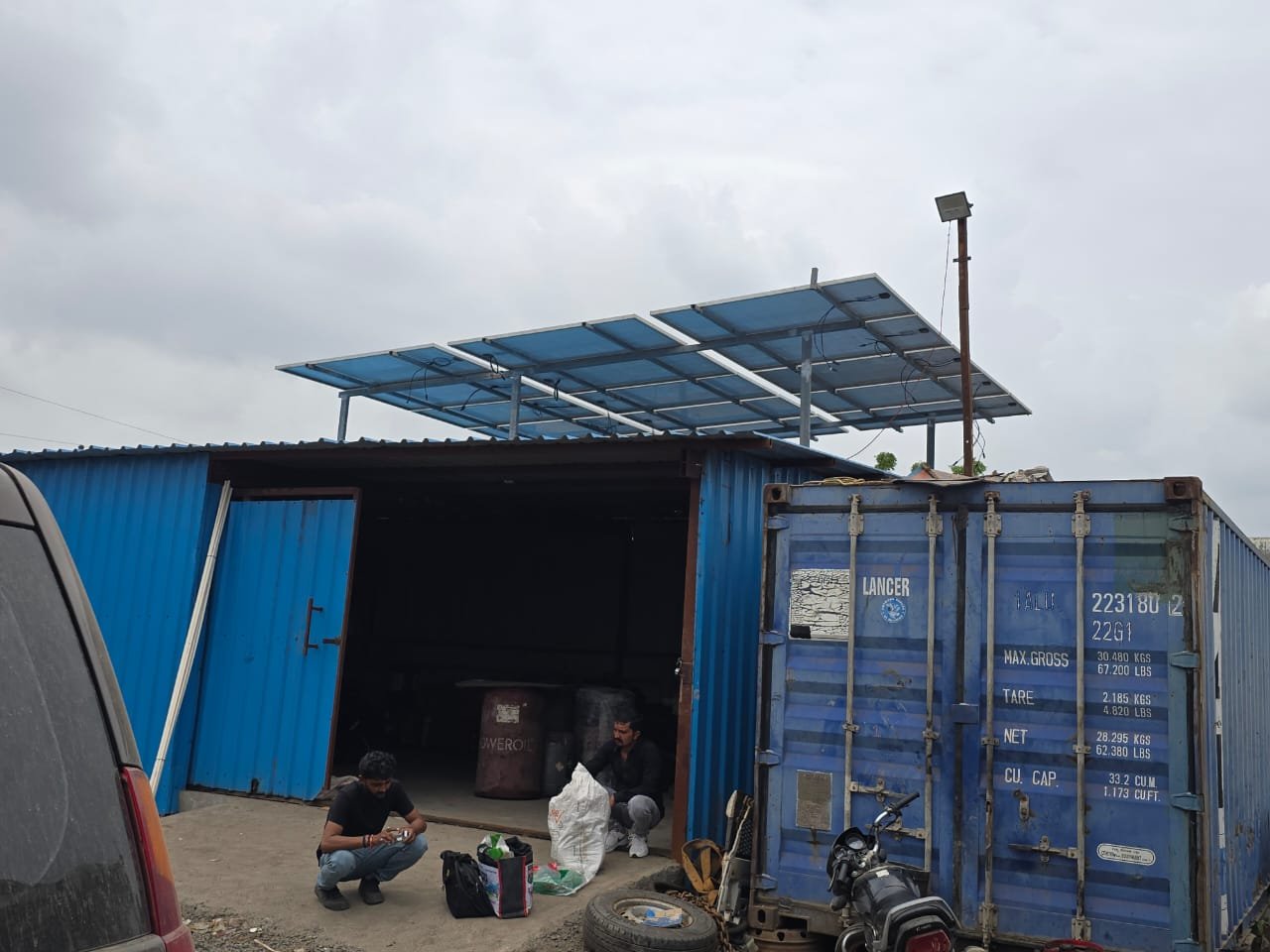
Vishwa Powertech Containerized Power Storage & Site Infrastructure
Our Capabilities

Turnkey Industrial Battery Storage Scope

From load curve profiling to PCS panel integration, liquid cooling, and UL 9540A fire safety.

Peak Shaving & ToD Tariff Shifting

Charge LFP battery banks during low-cost off-peak hours (or surplus midday solar) and discharge during expensive Time-of-Day (ToD) peak hours, reducing max demand kVA charges.

Sub-20ms Uninterrupted Backup

Instantaneous load transfer (< 20ms) ensuring sensitive automated assembly lines, CNC machines, and textile looms run without micro-outage tripping or production losses.

Solar & Wind Energy Time-Shifting

Store surplus daytime solar generation and release it during night shifts or peak tariff hours, maximizing solar self-consumption up to 90% for industrial power profiles.

Industrial Microgrid & Islanding

Seamless microgrid control enabling your factory or process plant to isolate safely from the main grid during extended blackouts, maintaining essential operations without interruption.

Liquid Cooling & BMS Safety

Containerized ISO units with closed-loop liquid thermal cooling, cell-level Battery Management Systems (BMS), and automated aerosol fire suppression certified under UL 9540A.

Grid Frequency & Ancillary Services

Utility-grade BESS for renewable parks — delivering primary frequency response, synthetic inertia, and reactive power support compliant with CEA grid standards.

Our Process

How a BESS Project Gets Delivered

1

Load Analysis & Sizing

We study your load profile, demand curve, ToD tariff structure, and outage history to size battery capacity (kWh) and power rating (kW) for maximum ROI.

2

System Design & Selection

LFP chemistry selection, container layout, PCS (Power Conversion System), and EMS architecture integrated with your existing switchgear.

3

Installation & Wiring

Container placement, DC battery rack interconnection, PCS-to-grid wiring, switchgear termination, earthing, and fire suppression commissioning.

4

Commissioning & Handover

Full charge-discharge cycle testing, BMS calibration, EMS schedule programming, protection relay coordination, and operator training.

Technical Specifications

BESS Storage Engineering Parameters

Industrial battery performance metrics, transfer speeds, thermal safety, and certification standards.

Lithium Storage & Thermal Management Specifications
UL 9540A Fire Safety Tested
Technical Parameter Engineering Specification Applicable Standard
Storage Capacity Scope 500 kWh to 100 MWh+ Modular ISO Container Units IEC 62619 System Code
Cell Chemistry Lithium Iron Phosphate (LiFePO4 / LFP Prismatic Cells) IEC 62619 / UL 1973
Cycle Life Rating 6,000+ Deep Cycles @ 80% Depth of Discharge (DoD) 15+ Year Operational Life
Grid Transfer Response Millisecond Fast Transfer (< 20ms Uninterrupted Transition) IEEE 1547.4 Islanding Code
Round-Trip Efficiency > 91.5% AC-to-AC System Efficiency IEC 62933 Efficiency Test
Thermal Management Liquid Cooling System with Redundant Pumps & Aerosol Suppression UL 9540A Fire Certified
Enclosure Protection ISO 20ft / 40ft Weatherproof Heavy Steel Container (IP54/IP65) IEC 60529 IP Enclosure
Why Vishwa Powertech

Why Factories Trust Us for BESS

Industrial electrical integration expertise, Tier-1 safe LFP cell chemistry, and custom ROI sizing.

In-Depth Electrical System Integration

BESS plugs directly into your PCC panels and switchgear. Because we build industrial electrical systems every day, seamless integration is guaranteed.

Custom Sized for Maximum Payback

We don't sell generic off-the-shelf containers. We analyze your actual ToD tariff slabs, peak load curves, and outage losses to engineer optimal system capacity.

Tier-1 LFP Safety Standard

No thermal runaway risks. LFP chemistry has high thermal stability. All cell packs include cell-level fusing and UL 9540A certified fire suppression.

Comprehensive Long-Term O&M

Battery health tracking, cell balancing, firmware optimization, and preventive maintenance all covered under our Annual Maintenance Contracts.

91.5%
Round-Trip Efficiency
6,000+
Deep Cycle Life
< 20ms
Grid Transfer Speed
10 Yrs
System Warranty
Frequently Asked Questions

Common Questions About BESS

For short outages (up to 2–4 hours), absolutely. Batteries respond in milliseconds versus 8–12 seconds for a DG. There's no diesel cost, no exhaust emissions, no noise, and no maintenance headaches. For longer outages, a hybrid setup (BESS + DG) works well — the battery handles immediate transfer and the DG takes over for extended periods. Many factories are replacing their DG sets with BESS + solar for both economic and compliance reasons.
LFP battery systems currently cost ₹1.2 to ₹1.8 crore per MWh (installed) depending on the power rating, container configuration, and integration complexity. A typical 500 kWh system for an SME factory would run around ₹60–90 lakhs. The payback depends on your peak-to-off-peak tariff difference — in states with high ToD differentials like Gujarat and Maharashtra, payback is 4–6 years.
Yes, and it's one of the best use cases. Your solar system generates peak power during midday when you might not need all of it. The BESS stores the surplus and releases it during evening peak hours or night shifts. This combination can push your grid independence to 80–90% for many industrial load profiles.
LFP chemistry delivers 6,000+ deep discharge cycles at 80% depth of discharge. In a typical peak-shaving application with one cycle per day, that translates to about 15–18 years of useful life. Even after 6,000 cycles, the battery still retains about 70–80% of its original capacity. Compare that to lead-acid which gives you 1,000–1,500 cycles at best.
LFP is the safest lithium battery chemistry available. Unlike NMC (Nickel Manganese Cobalt) cells that can experience thermal runaway at elevated temperatures, LFP cells have a much higher thermal stability threshold. Our containers include multiple safety layers — cell-level fuses, rack-level disconnects, BMS with temperature monitoring, smoke detectors, and aerosol fire suppression systems tested to UL 9540A standards.
Partner With Engineering Experts

Tired of Grid Outages and Peak Demand Charges?

Contact our team of senior electrical engineers and battery storage specialists for a custom BESS ROI analysis and technical audit.

Chat on WhatsApp