High Voltage Electrical Engineering

EHV Substations & Transmission Lines EPC

Whether you need a 33kV industrial receiving substation or a 220kV grid evacuation switchyard for your solar park — we build it from foundation to final relay calibration. Complete turnkey substation and transmission line construction with CEIG statutory approval.

Call Us Now
What We Do

EHV Substation & Transmission Line EPC

We engineer and construct 11kV to 220kV receiving and grid evacuation substations (AIS & GIS) alongside transmission lines for industrial plants, solar parks, and utilities — with a 100% CEIG approval record.

11kV–220kV AIS & GIS Switchyards
Power Transformers (5 MVA to 100 MVA)
Lattice Transmission Towers & Stringing
100% CEIG Electrical Statutory Clearance
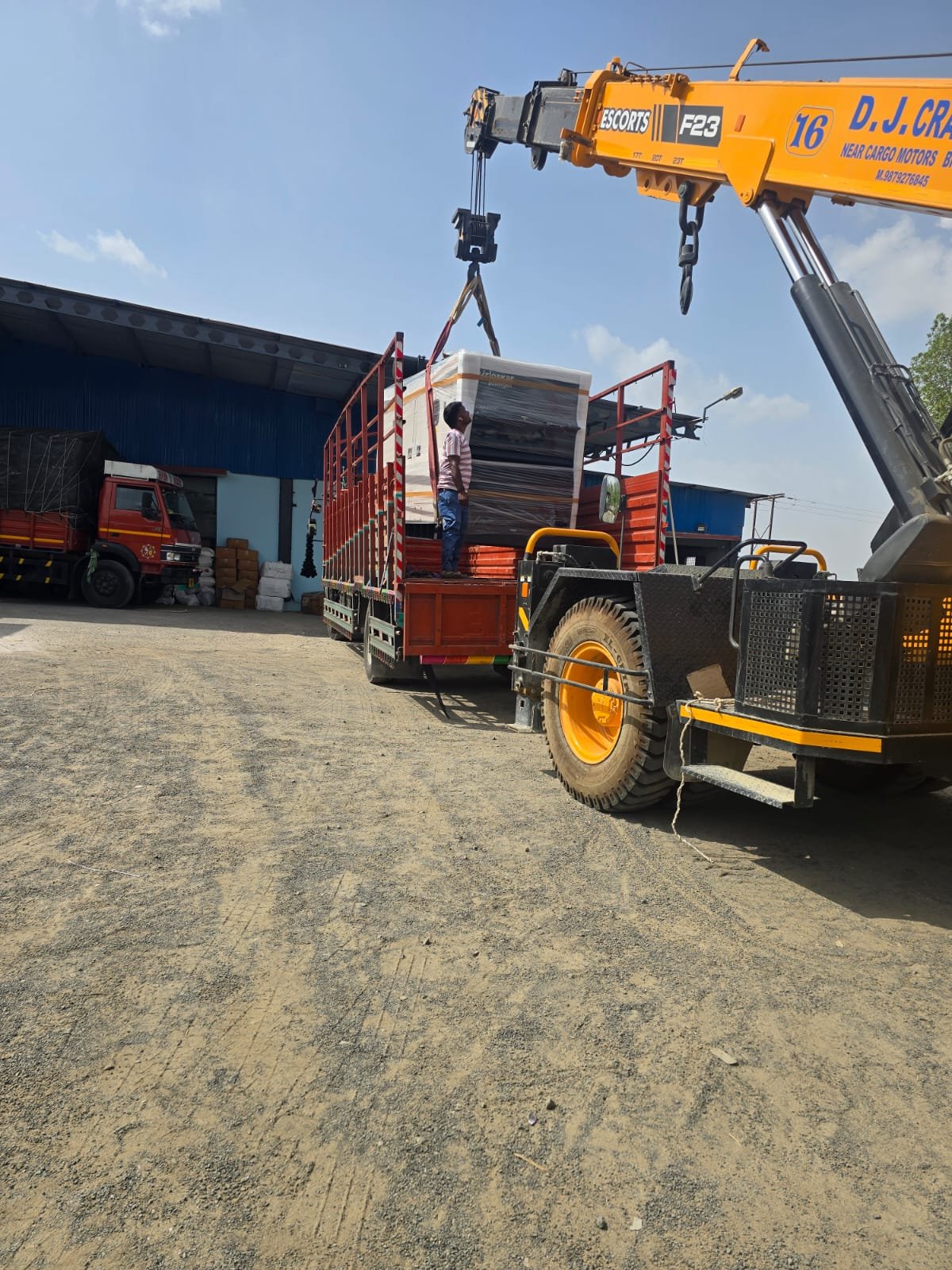
Vishwa Powertech Heavy Crane Substation Equipment Commissioning
Our Capabilities

Turnkey Substation & EHV Transmission Scope

11kV to 220kV outdoor AIS switchyards, indoor GIS installations, power transformers, and GETCO/PGCIL approvals.

Outdoor AIS Switchyards (33kV to 220kV)

Complete AIS switchyard civil foundations, gantries, isolators, SF6/VCB circuit breakers, CT/PT metering units, and lightning protection systems compliant with IS 2026 / IEC 62271.

Compact Indoor GIS Substations

Gas-Insulated Switchgear (GIS) installations for footprint-constrained industrial plants and urban utility bays, providing maintenance-free SF6 metal-enclosed breaker bays.

Power Transformers (Up to 100 MVA)

Erection, vacuum oil filling, OLTC tap-changer commissioning, and pre-energization testing (ratio, tan-delta, insulation resistance) for 5 MVA to 100 MVA power transformers.

Numerical CRP & SCADA Automation

IEC 61850 compliant Control & Relay Panels (CRP) equipped with numerical distance relays, differential schemes, disturbance recorders, and SAS substation automation.

EHV Overhead Transmission Lines

Lattice steel tower foundation civil works, tower section erection, and ACSR/AL59 conductor stringing for 33kV to 220kV evacuation lines per GETCO / PGCIL line standards.

100% CEIG Approval & Statutory Liaison

In-house statutory licensing team managing layout approvals, statutory safety clearances, CEIG inspection certification, and energized charging permissions.

Our Process

How a Substation Gets Built

1

Single Line Diagram & Design

Load requirement, voltage class, fault level, and protection scheme study. Single line diagram (SLD), GA drawings, and civil layout finalized before ground breaking.

2

Civil & Structural Work

RCC foundations for transformers, control room building, equipment plinths, cable trenches, earthing grid, and switchyard grading.

3

Equipment Erection & Wiring

Transformer positioning, bus bar mounting, breaker/isolator erection, CT/PT connection, control cable termination, and relay panel wiring.

4

Testing & CEIG Approval

Insulation resistance, ratio, oil BDV, relay injection testing, protection scheme validation, earthing check, and final CEIG clearance.

Technical Specifications

Substation & Transmission Line Engineering Parameters

EHV design parameters, switchgear breaking capacities, and statutory compliance standards.

EHV Substation & Transmission Specifications
100% CEIG Approval Record
Technical Parameter Engineering Specification Applicable Standard
Voltage Class Scope 11kV, 33kV, 66kV, 132kV, 220kV Receiving & Evacuation Substations GETCO / MSETCL / PGCIL Code
Switchyard Architecture Outdoor AIS (Air Insulated) / Indoor GIS (SF6 Gas Insulated) IEC 62271-200 / IS 13118
Power Transformers 5 MVA to 100 MVA (ONAN/ONAF Cooling, OLTC Tap Changer) IS 2026 / IEC 60076
Circuit Breaker Rating SF6 / Vacuum Breakers (25kA – 40kA Short-Circuit Breaking) IEC 62271-100 Standard
Protection & Relay Panels Numerical Distance, Differential, Overcurrent & Earth Fault Relays IEC 61850 Substation Automation
Transmission Line Specs Lattice Galvanized Towers with ACSR Panther/Dog/Moose Conductors IS 802 / CBIP Manual
Earthing Grid Resistance Copper Strip / GI Earthing Mesh with < 1.0 Ohm Grid Resistance IEEE 80 / IS 3043 Code
Why Vishwa Powertech

Why We're the Right Substation Partner

Direct in-house execution, 100% statutory clearance, and GETCO/PGCIL compliance.

Direct In-House Construction Crews

No third-party subcontracting. Our own civil and electrical crews handle everything from foundation excavation to relay calibration for maximum quality control.

100% First-Time CEIG Clearance Record

Every substation we've built cleared the Chief Electrical Inspector's office on first submission. Our earthing and protection schemes meet statutory norms strictly.

Utility Grid Code Compliance

Thorough experience with GETCO, MSETCL, and PGCIL grid standards. We handle drawing approvals, line bay extensions, and utility interconnection paperwork from end to end.

Combined Solar + Substation Delivery

When building renewable energy parks, the pooling substation is part of the same EPC contract — eliminating finger-pointing between separate contractors.

220kV
Highest Voltage Built
100%
CEIG Approval Rate
100 MVA
Largest Transformer
150+
Substations Commissioned
Frequently Asked Questions

Substation & Transmission Line FAQs

AIS (Air Insulated Switchgear) is the traditional outdoor design where each piece of equipment — circuit breaker, isolator, CT, PT — is mounted separately on steel structures with air as insulation between conductors. It needs a lot of space because you need safety clearances between live parts. GIS (Gas Insulated Switchgear) puts everything inside metal-enclosed compartments filled with SF6 gas, which insulates much better than air. GIS is compact — a 132kV GIS bay can fit in 20% of the space an AIS bay needs. But GIS costs more upfront. GIS makes sense for urban locations where land is expensive.
Typically 4 to 6 months from ground breaking to CEIG approval. Civil works take about 6–8 weeks, equipment erection 4–6 weeks, control wiring and relay panels 3–4 weeks, and testing plus CEIG inspection another 2–3 weeks. These timelines assume the transformer and major equipment are already procured — transformer delivery lead time is usually the longest item at 12–16 weeks for custom ratings.
Yes, completely. We prepare all CEIG documentation — single line diagrams, GA drawings, earthing calculations, protection scheme write-ups, equipment test certificates, and the statutory application form. We coordinate the inspector's site visit, address any observations or corrections on the spot, and follow up until the approval certificate is in your hand.
Yes, bay extensions are a regular part of our work. When a solar park adds new capacity or an industry needs an additional feeder, we design and construct the new bay — including bus bar extension, breaker installation, CT/PT addition, and protection relay integration — without shutting down the rest of the substation. Hot-line work permits are coordinated with the DISCOM's operations team.
It depends on the voltage and current rating. For 33kV lines, we typically use ACSR Dog (100 sq.mm) or Panther (200 sq.mm). For 132kV lines, ACSR Panther or Zebra. For 220kV, ACSR Moose with twin or quad bundling. The conductor selection is based on thermal current rating, sag-tension calculations, and wind/ice loading for your specific terrain and span length.
Partner With Engineering Experts

Need a Substation or Transmission Line Built?

Send us your single-line diagram or project brief. Our engineers will prepare a detailed scope of work, technical drawings, and cost estimate.

Chat on WhatsApp